📖 How to Decide (Seed)
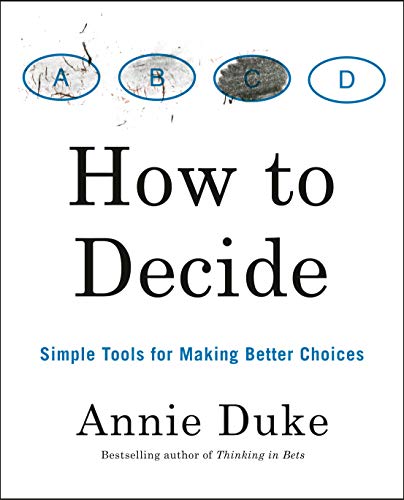
As someone who has always struggled with overthinking before making decisions, How to Decide by Annie Duke offered a lifesaving framework for improving myDecisionMaking processes. The book’s practical strategies and relatable examples made it easy to apply these concepts to both personal and professional situations.
🧠 Key Concepts
Duke emphasizes the inconsistency in our decision-making processes, which often stems from cognitivebias,emotion, and a failure to consider all possible outcomes thoroughly. This lack of consistency hinders our ability to learn from past experiences and improve our choices. By recognizing these patterns in my own behavior, I was able to identify areas for improvement and adopt strategies to overcome them.
📈 Improving Decision Quality
One of the key processes proposed in this book is elaborating probabilities by assigning numerical values to different scenarios. This approach helps in making more informed decisions by weighing the potential outcomes and reducing the impact of emotions on our choices. Here are the steps to follow when implementing this process:
- 🔍 Identify the decision: Start by clearly defining the decision you need to make, as well as the possible outcomes associated with each choice.
- 📋 List all scenarios: Enumerate all the potential scenarios and their corresponding outcomes that could result from your decision.
- 🎲 Assign probabilities: Estimate the likelihood of each scenario occurring based on your knowledge and experience. Assign a numerical value (e.g., percentage) to represent the probability of each outcome.
- 💰 Determine the payoffs: For each scenario, assess the potential benefits and drawbacks associated with the outcomes. Assign numerical values to represent the payoffs for each possible outcome.
- 📊 Calculate expected values: Multiply the probabilities by their respective payoffs to determine the expected value of each scenario. This will help you understand which choice is more likely to lead to a favorable outcome.
- 🏆 Compare and choose: Evaluate the expected values for each scenario and choose the option with the highest expected value. This approach ensures that your decision is based on a rational assessment of the potential outcomes, rather than being influenced by emotions or other cognitive biases.
- 📈 Reflect and learn: After making the decision, reflect on the outcome and compare it to your initial probabilities and payoffs. This exercise will help you refine your estimation skills and improve your future decision-making processes.
By following these steps, I was already able to make some more informed decisions by weighing the potential outcomes and minimizing the impact of emotions on my choices. This process has been invaluable in helping me overcome analysis paralysis and make confident decisions in both my personal and professional life.
💭 Emotional Awareness
Duke also emphasizes the importance of emotional awareness in making better decisions. Recognizing how emotions can cloud judgment during decision-making has been transformative for me. By identifying these instances, I can take steps to manage my emotions and make more rational choices. Additionally, scenario planning helped me prepare for various contingencies and minimize the impact of unexpected events, leading to more resilient decisions.
📚 Conclusion
How to Decide is a comprehensive guide for improving decision-making skills. By understanding the pitfalls of inconsistent and unclear thinking, and employing practical strategies like elaborating probabilities, seeking unbiasedfeedback, and practicing reflective journaling, readers can enhance their decision-making processes significantly. The book is particularly valuable for professionals in high-stakes environments where accurate decisions are critical. I highly recommend it to anyone looking to make better choices in both their personal and professional life.